


The right way to respond to a bad review is to acknowledge the specific issue, avoid arguing in public, apologise where it’s actually warranted, and move the resolution to a private channel, all within 24 to 48 hours. That’s the whole framework. Everything else in this guide is about executing it well instead of getting defensive, generic, or silent, which is what actually damages a brand, not the bad review itself.
Here’s the template to use right now, then the reasoning and the mistakes to avoid.
The Response Framework
“Thank you for sharing this. [Specific reference to their issue] isn’t the experience we want anyone to have, and I’m sorry it happened. I’d like to look into this properly. Could you reach out to us at [contact] with [order number/visit date / relevant detail]? We’ll make it right.”
Four things are doing the work in that template:
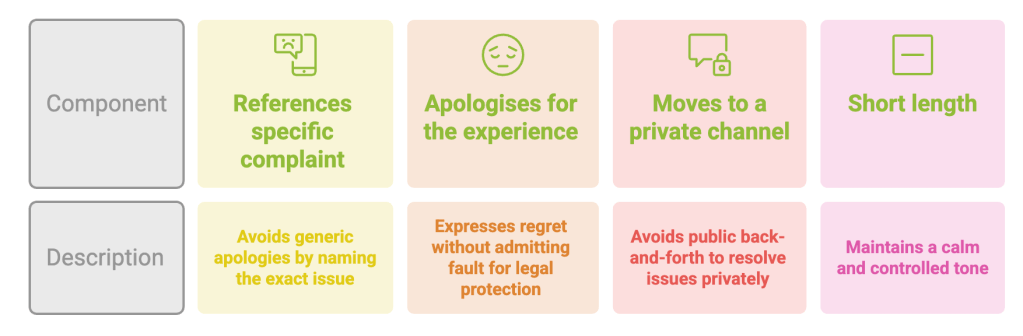
- It references their specific complaint, not a generic apology. If they mentioned a delayed delivery, say “delayed delivery,” not “your experience.”
- It apologises for the experience, not necessarily the fault. You can be sorry someone had a bad time without admitting your business did something wrong. That distinction protects you legally and still reads as sincere.
- It moves to a private channel. Public back-and-forth rarely resolves anything and gives every future reader a front-row seat to the mess.
- It’s short. A long, defensive response reads as anxious. A short, calm one reads as in control.
Adjust the wording to sound like your actual brand voice, but keep this exact structure. It works whether you’re a five-person salon or a SaaS company with ten thousand users.
Respond Within 24 to 48 Hours
Speed matters more than most business owners think. A fast response signals that someone is actually watching and cares. A response that shows up two weeks later reads as an afterthought, even if the words are perfect. Set a rule: negative reviews get a reply within a day, no exceptions, even if the full resolution takes longer. “We’re looking into this” beats silence every single time.
Five Mistakes That Hurt Your Brand
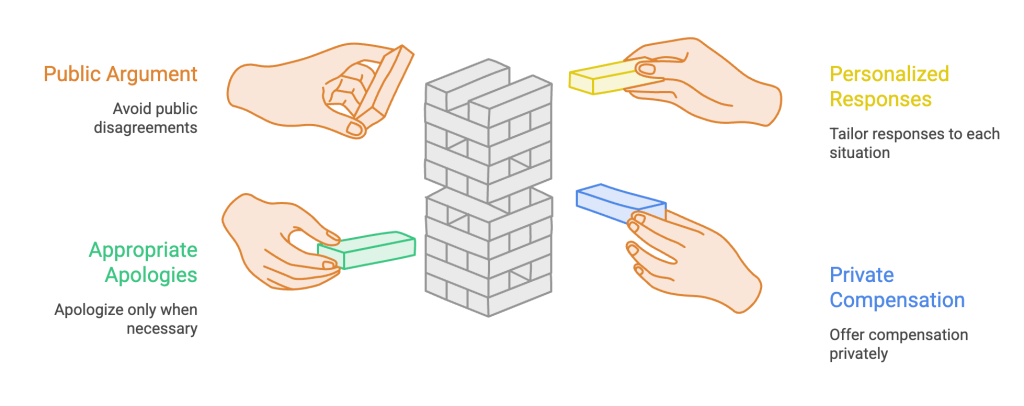
Arguing in public: The moment you contradict a customer publicly, even if you’re right, you’ve made the review about a fight instead of a resolved problem. Everyone reading later remembers the tone, not who was technically correct.
Copy-pasting the same response everywhere: Customers, and increasingly Google, can tell. A templates “We’re sorry to hear this, please contact us” under every negative review reads as a business that isn’t actually listening.
Over-apologizing for things that aren’t your fault: If a customer complains about a policy you clearly stated upfront, don’t grovel. Acknowledge their frustration, restate the policy calmly, and move on. Excessive apology for a non-issue makes you look like you have something to hide.
Offering compensation publicly: Discounts, refunds, and freebies belong in a private conversation. Offering them in the public reply invites every future unhappy customer to leave a bad review specifically to get one.
Ignoring it because it feels unfair: An unanswered negative review sits there indefinitely, and every future customer reads the silence as confirmation. Even a review you strongly disagree with deserves a calm, professional reply.
Three Scenarios, Three Templates
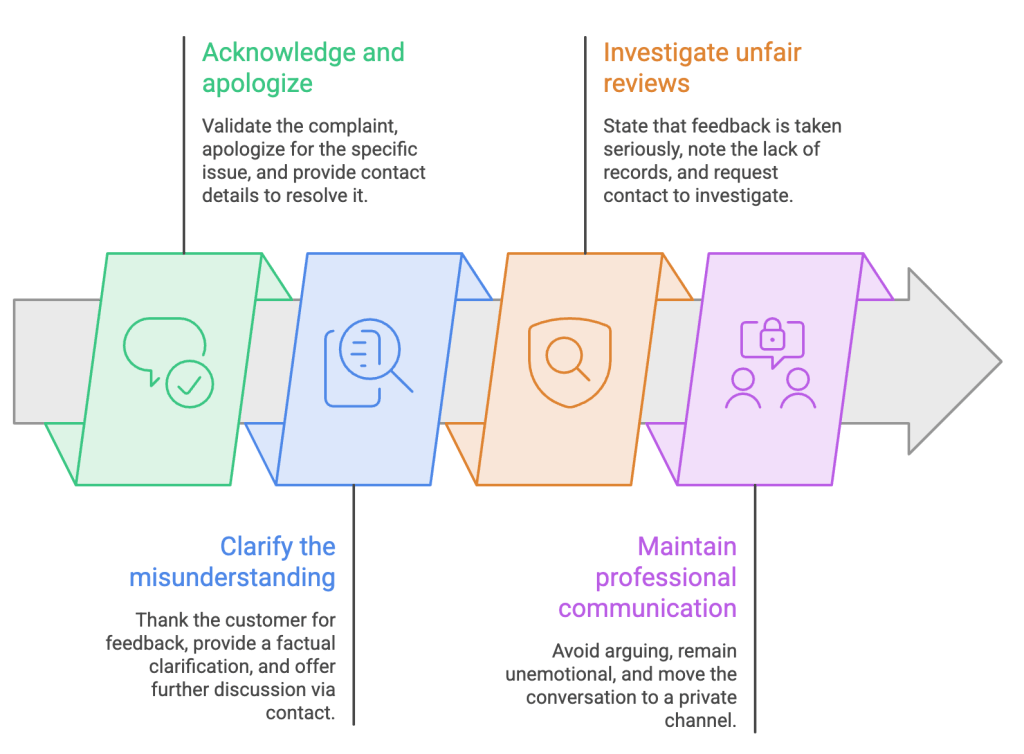
When the complaint is genuinely valid:
“You’re right, and we’re sorry. [Specific issue] shouldn’t have happened, and we’re taking steps to fix it. Please reach out at [contact] so we can make this right for you directly.”
When it’s a misunderstanding, not a failure:
“Thanks for the detailed feedback. It sounds like there may have been some confusion around [specific point], happy to clarify: [brief, factual clarification]. Feel free to reach out at [contact] if you’d like to discuss further.”
When the review seems unfair or factually wrong:
“We take feedback like this seriously and would like to understand what happened. We don’t have a record matching these details, could you reach out at [contact] so we can look into it properly?”
Notice none of these argues, none of them gets emotional, and all of them move to a private channel. That’s the pattern to copy, not just the exact words.
When to Escalate Instead of Just Responding
Not every bad review is a service issue you can fix with a good reply. Report it through the platform if it clearly violates policy: a fabricated experience, a competitor posing as a customer, personal information posted publicly, or harassment.
If someone threatens a bad review unless you pay them, that’s extortion, not feedback. Save every message, don’t pay, report it through the platform, and document everything. Most bad reviews don’t fall into this category, but the ones that do need a completely different response than a polite apology.
The Follow-Up Nobody Does, But Should
Once you’ve actually resolved the issue with the customer privately, go back and update your public reply, or ask if they’d consider revising their review now that it’s fixed.
Something as simple as: “Following up publicly, we’ve resolved this with [customer name] directly and made changes to prevent it from happening going forward.”
This does two things a first reply can’t. It shows every future reader that complaints actually lead to fixes, and it demonstrates a pattern of follow-through, not just damage control.
Frequently Asked Questions
Ques. How fast should you respond to a bad review?
Ans. Within 24 to 48 hours. Speed signals attentiveness even before the actual resolution happens, and slow responses read as indifference regardless of how good the wording is.
Ques. Should you apologise even if the business wasn’t at fault?
Ans. Apologise for the customer’s experience, not necessarily for being wrong. You can express genuine regret that someone had a bad time without admitting fault you don’t actually have.
Ques. Is it okay to offer a refund or discount in a public reply?
Ans. No. Keep compensation private. Publicly offering it invites other customers to leave negative reviews specifically to receive the same offer.
Ques. What if the review is fake or clearly unfair?
Ans. Report it through the platform if it violates policy. If it doesn’t clearly violate policy, respond calmly and factually rather than assuming removal is an option.
Ques. Do you need to respond to every negative review, even old ones?
Ans. Prioritize recent and unresolved reviews first, but an old, unanswered complaint that raises a real recurring issue is still worth a late reply. Silence, even on an old review, still reads as unresolved.
The Actual Point
A bad review isn’t the moment your brand takes damage. A bad response is. Customers reading reviews are not looking for a business with zero complaints, that’s not realistic and everyone knows it. They’re checking how a business behaves when something goes wrong, because that’s the actual preview of what happens if their own order, booking, or service hits a snag too.
Handle it calmly, quickly, and privately, and a bad review often ends up doing your brand a favor by showing exactly that. If you’re managing this across Google, social media, and half a dozen other platforms, a tool like Olly can flag the negative ones the moment they land, so the 24 to 48 hour window never quietly slips by unnoticed.