


The most effective ways to collect customer feedback are QR code surveys, post-purchase messages, in-person asks, social media listening, and automated review requests, used together instead of relying on just one.
No single channel captures everyone. Some customers only respond to a quick tap on their phone, others only speak up when someone asks them directly. The businesses that grow fastest are the ones collecting from multiple touchpoints and actually doing something with what comes back.
This applies whether you run a restaurant, a salon, a retail store, or a hotel. The channels change slightly, but the principles don’t. Here are 10 methods that work, in order of how easy they are to start today.
Why Feedback Collection Is Harder Than It Looks
Most businesses assume they’re already hearing from customers because reviews trickle in every so often. In reality, only the extremes tend to speak up unprompted, the thrilled customers and the furious ones. Everyone in the middle, the majority who had a decent experience with a few small frustrations, walks away silently. They don’t leave a review. They just visit less often, or switch to a competitor without ever explaining why.
That silent majority is where the real opportunity sits. A customer who found the checkout process clunky but didn’t complain isn’t going to write a strongly worded review about it, they’re just going to notice it every time and eventually stop coming back. Without a system that makes it easy and worthwhile for everyone to speak up, not just the people who feel strongly enough to type unprompted, a business is only ever seeing a sliver of the real picture.
That’s the actual goal behind every method below: lowering the effort it takes for an average customer to tell you something true.

1. Use QR Codes for Instant Feedback
QR codes turn feedback collection into a fifteen-second task instead of a form nobody fills out. Place them on receipts, packaging, checkout counters, or table cards, and link them to one or two quick questions. The shorter the ask, the higher the response rate. A QR code that opens a five-page survey will get ignored just as often as no QR code at all.
2. Send Post-Purchase Feedback Requests at the Right Time
Timing decides whether a feedback request gets answered or deleted. The sweet spot is usually within 24 to 48 hours of the purchase or visit, while the experience is still fresh but the customer isn’t mid-task. A single-tap link straight to your review page removes friction and noticeably improves response rates compared to a generic “please leave us a review” message.
3. Reward Feedback the Right Way
Small incentives like loyalty points, a discount code, or early access to something new can nudge customers who’d otherwise stay silent. The catch is to reward participation, not positivity. If discounts only show up after a five-star review, customers learn to inflate their answers, and you lose the one thing feedback was supposed to give you: the truth.
4. Pair Ratings With Short Surveys
A star rating tells you what a customer thinks. A short survey tells you why. Three or four focused questions, each answerable in under a minute, will get you far more useful detail than a single number ever could, without asking so much that people abandon it halfway through.
5. Listen on Social Media
Customers talk about businesses on social media whether anyone’s watching or not. Comments, story tags, and DMs are unfiltered feedback that costs nothing to collect. Check mentions and tags on a regular schedule, and use quick polls on Instagram or LinkedIn when you want a fast read on a specific question.
6. Follow Up With Customers Who Stay Quiet
The customers who never leave a review or complaint aren’t necessarily happy. They might just be the type who doesn’t speak up unless asked directly. A gentle, personal follow-up, especially with repeat customers, often surfaces small frictions before they turn into someone who quietly stops coming back.
7. Automate the Request, Not the Relationship
Manually asking every customer for feedback works until you have more than a handful a day. Automation tools can trigger a request right after checkout or delivery, consistently and without anyone having to remember. The message should still read like it came from a real person at your business, not a system.
8. Collect Feedback in the Customer’s Preferred Language
People are far more likely to share honest, detailed feedback in the language they’re most comfortable in. If your customer base is multilingual, offering feedback forms in more than one language, or using tools that translate responses automatically, opens the door to input you’d otherwise miss entirely.
9. Bring Every Platform Into One Dashboard
Feedback doesn’t arrive in one tidy stream. It shows up across Google, Instagram, WhatsApp, and industry-specific platforms, and checking each one separately eats up time that most businesses don’t have. This is exactly the problem a tool like Olly is built to solve. Whether you’re running a restaurant, a salon, a retail store, or any customer-facing business, Olly pulls reviews and mentions from across platforms into a single dashboard, so collecting feedback stops depending on someone remembering to log into five different apps every week.
10. Use Tools That Do More Than Just Store Feedback
The most useful feedback tools don’t just collect responses, they help you make sense of them. Look for platforms that surface recurring themes, flag negative sentiment early, and make it easy to reply without switching tabs. The goal isn’t a bigger pile of feedback. It’s a clearer picture of what to fix next.
What to Do With Feedback Once You Have It

Collecting feedback is only half the job. Here’s the loop that actually turns it into growth:
- Review it on a fixed schedule. Weekly works for most businesses. Waiting longer lets small issues turn into patterns before anyone notices.
- Look for repeats. One comment about slow service is a one-off. Five comments about it across different days is a real signal.
- Close the loop. Reply to reviews, thank customers for flagging issues, and let them know what changed. Customers who see their feedback acted on come back more often than customers who never hear anything.
- Share the wins internally. When feedback praises a specific employee or product, tell them directly. It reinforces exactly the behaviour that earned the praise in the first place.
Displaying Feedback Where New Customers Can See It
Feedback isn’t just an internal fixing tool, it’s also one of the most persuasive things on your website. A steady stream of visible, recent, positive feedback does more to convince a new customer than any amount of marketing copy, because they trust other customers more than they trust you.
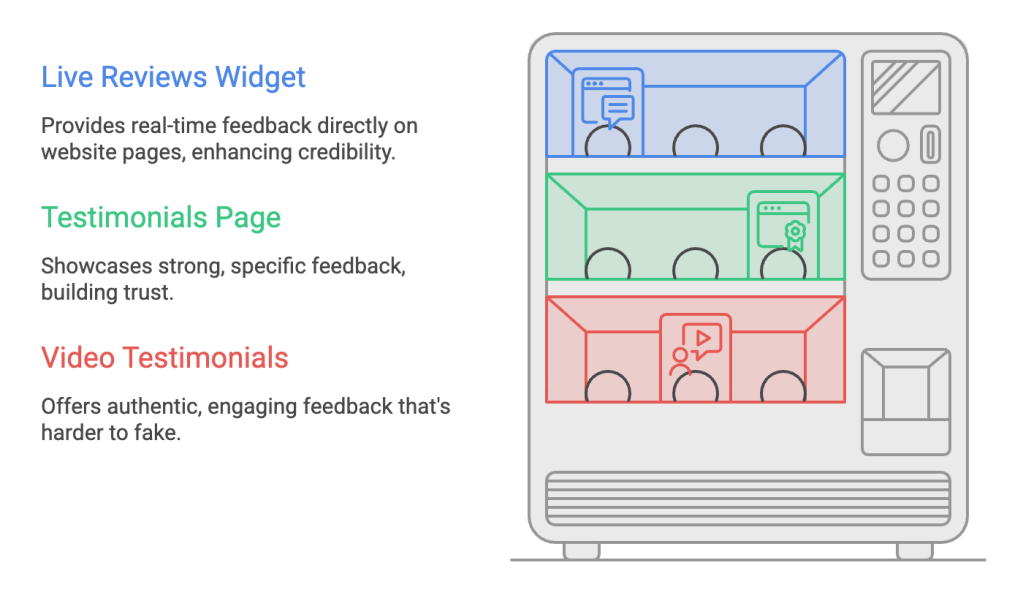
- Embed a live reviews widget on your website or landing pages.
- Build a dedicated testimonials page featuring your strongest, most specific feedback.
- Use short video testimonials where you can get them. They’re harder to fake than text and tend to convert better because of it.
None of this needs to be complicated or expensive. A simple widget that pulls in your latest Google reviews, updated automatically, already does more for a new visitor’s confidence than a static “what our customers say” section that hasn’t been touched in a year.
Frequently Asked Questions
Ques. What is the best way to collect customer feedback?
Ans. There’s no single best way. QR codes and post-purchase messages tend to get the highest response rates because they’re fast and well-timed, but combining several channels, including social media and in-person asks, captures a fuller picture than relying on just one.
Ques. How often should a business ask for feedback?
Ans. Ask at natural moments: right after a purchase or visit, after resolving a complaint, and periodically with repeat customers. Asking too often causes fatigue and lower response rates. Asking too rarely means problems go unnoticed until they’ve already cost you customers.
Ques. How do you get more customers to actually respond?
Ans. Keep requests short, time them close to the experience, and consider a small, honest incentive. Personalising the message, using the customer’s name or referencing their specific purchase, also measurably improves response rates.
Ques. Can feedback from different platforms be managed in one place?
Ans. Yes. Tools like Olly bring reviews and mentions from Google, social media, and other platforms into a single dashboard, so any business can track and respond to feedback without checking multiple apps separately.
Ques. What should a business do after collecting feedback?
Ans. Review it regularly, look for repeated themes rather than one-off comments, close the loop with customers who raised issues, and share positive feedback internally to reinforce what’s working.
Where This Goes Next
Feedback stops being useful the moment it becomes a pile nobody reads. The businesses pulling ahead aren’t the ones with the most reviews, they’re the ones who respond fastest, catch patterns early, and make customers feel heard in under a minute. That’s not a quarterly project. It’s a habit, one closed loop at a time, until it shows up as customers who come back without needing a discount to convince them.
Start with one or two channels from this list. Get consistent with them before adding a third. And when checking five platforms a week starts eating into time you’d rather spend running the business, that’s the point where a tool like Olly earns its place in your stack.